

Packed to the Roof? Here’s What That Holiday Luggage Is Doing to Your Car
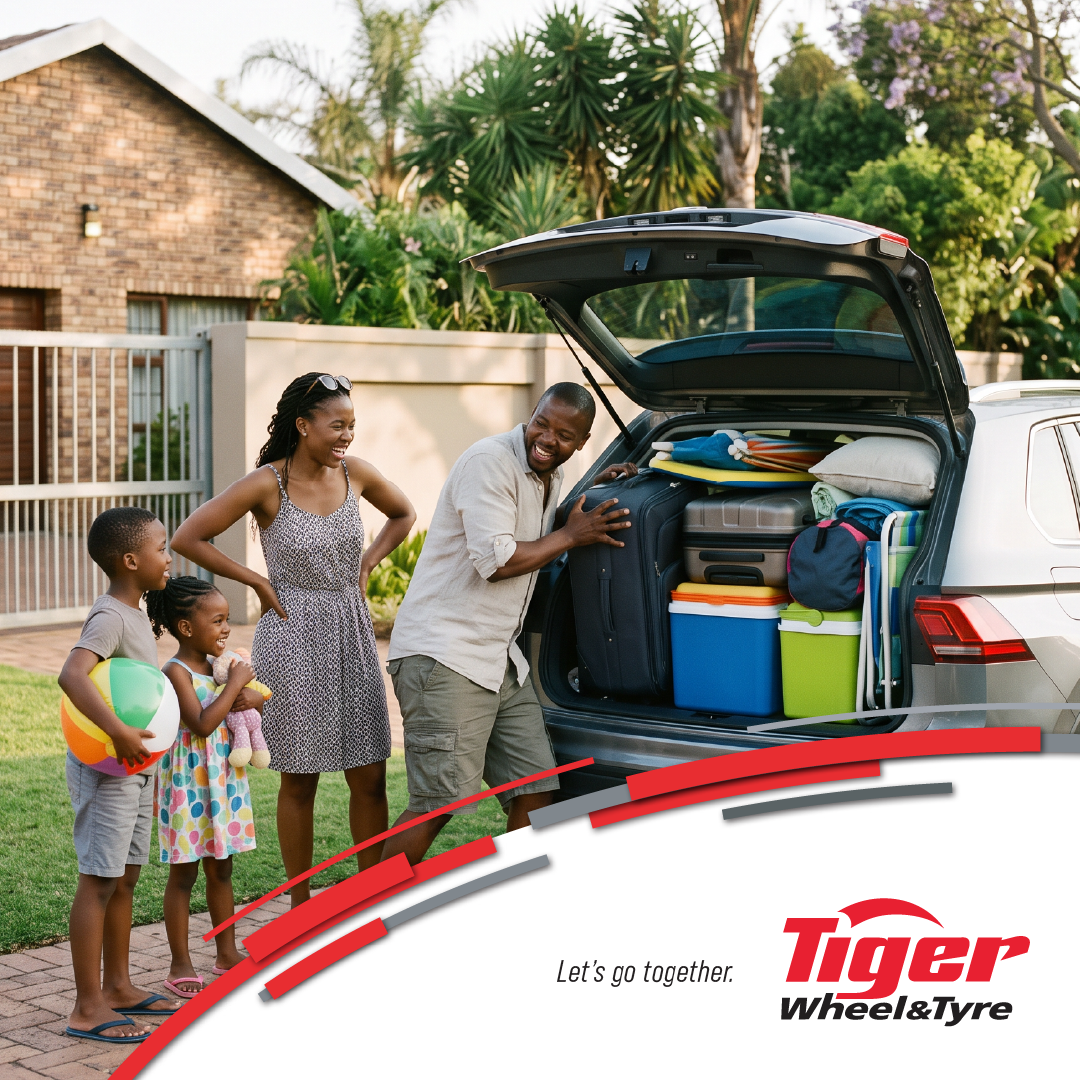
Johannesburg, November 2026 – It’s that time of year again. The holiday accommodation is booked, the route is planned, and the family is counting down the days. But before you can hit the road, there’s one final challenge: fitting what appears to be the entire contents of your home into the car.
Between the suitcases, cooler boxes, beach umbrellas, Christmas presents and the inevitable “just one more bag”, packing for the annual holiday can feel like a game of Tetris. Unfortunately, unlike the game, getting everything to fit doesn’t necessarily mean you’ve won.
Tiger Wheel & Tyre is reminding holidaymakers that how they pack their vehicles can have a significant impact on road safety, vehicle handling and fuel consumption.
Extra Weight Changes More Than You Think
A fully loaded vehicle behaves differently from one carrying just the driver. Additional weight increases the demands placed on tyres, affects acceleration and braking, and can change how a vehicle responds when cornering or making sudden manoeuvres.
“Most motorists are familiar with how their vehicles handle during everyday driving, but add a family, several suitcases and a boot full of holiday essentials, and the driving dynamics change,” says Chris Farrar, Group Retail Channel Executive at Tiger Wheel & Tyre. “Understanding those changes and preparing accordingly can make a real difference to your safety on the road.”
One of the most important considerations is your vehicle’s maximum permitted load. Every vehicle has a manufacturer-specified carrying capacity, which includes passengers, luggage and accessories. Exceeding this limit can compromise handling and place unnecessary strain on tyres and other components.
Pack Smart, Not Just Full
Where you place your luggage matters just as much as how much you pack.
Heavy items should be positioned as low as possible and secured to prevent movement. Avoid stacking loose luggage above the rear seatbacks unless an appropriate cargo barrier or restraint system is fitted. In an emergency stop, an unsecured cooler box can quickly become a rather unwelcome travelling companion.
Roof racks and roof boxes are useful for creating additional space, but they also raise the vehicle’s centre of gravity and increase aerodynamic drag. Always observe the manufacturer’s roof-load limits, including the weight of the rack or box itself.
Your Tyres Carry the Holiday Too
With extra weight comes additional responsibility for your tyres.
Vehicle manufacturers often specify different tyre pressures for normal and fully loaded driving. Before setting off, consult your vehicle’s handbook or tyre-pressure information label and adjust pressures accordingly, preferably while the tyres are cold.
Underinflated tyres generate additional heat and can affect handling, tyre wear and fuel consumption. Overinflation can also compromise tyre performance, so simply pumping them harder isn’t the answer.
While checking pressures, inspect the tread and sidewalls for visible damage, and don’t forget the spare tyre.
A Little Preparation Goes a Long Way
Before embarking on a long-distance journey, motorists are encouraged to have their tyres inspected and wheel alignment and balancing checked where necessary.
For additional peace of mind, Tiger Wheel & Tyre also offers X-Sure ZERO™, complimentary tyre insurance providing R500 cover per qualifying tyre for six months, subject to registration requirements and terms and conditions. Customers must register through the Tiger Wheel & Tyre app within seven days of purchase, and a 30-day waiting period applies.
As Farrar concludes, “The holidays should be about making memories, not dealing with avoidable problems on the roadside. Taking a little time to prepare your vehicle is one of the simplest ways to help ensure a safer journey.”
So, before squeezing in that last suitcase, remember: just because there’s room for it doesn’t mean your vehicle should carry it.
Travel safely. Arrive ready for the holiday.