Turning the key or pressing the start button and getting… nothing. Or perhaps a click. Or the engine turns over but simply refuses to start.
Before assuming you need a new battery, pay attention to what your car is doing. The sound it makes, how quickly the engine turns over, what happens to the lights and whether a jump-start works can all provide useful clues.
Here’s how to narrow down what may be keeping you parked.
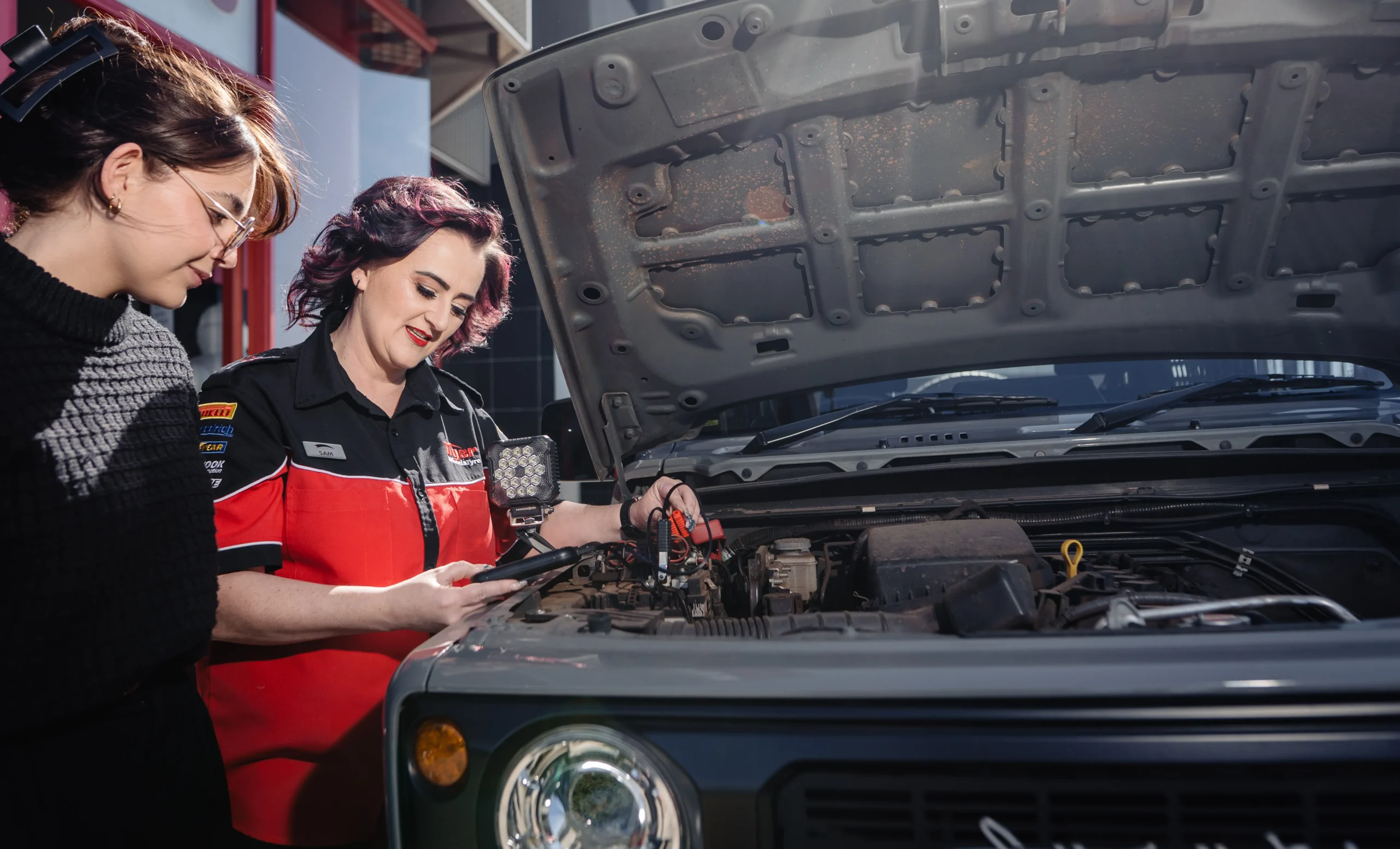
Why Won’t My Car Start?
For your engine to start, several systems need to work together. The battery needs to provide enough electrical power, the starter motor needs to turn the engine, and the engine itself needs the correct conditions to run.
That means a no-start problem could be caused by:
- A flat or failing battery
- Loose or corroded battery connections
- A starter motor problem
- An alternator or charging-system fault
- An ignition or electrical fault
- A fuel-delivery problem
- An immobiliser or key-recognition problem
- Another mechanical or electronic fault
The first clue is often what happens when you try to start the car.
Signs Your Car Battery Could Be the Problem
A battery doesn’t necessarily go from perfectly healthy to completely dead overnight. A weakening battery may give you warning signs first.
The engine cranks slowly
Listen to the engine as you try to start it. If it turns over more slowly or sluggishly than usual, the battery may not be supplying enough power to the starter motor.
A slow crank can also be caused by poor electrical connections, so it isn’t proof that the battery itself needs replacing.
You hear rapid clicking
Repeated, rapid clicking when you turn the key or press the start button often indicates that there isn’t enough electrical power reaching the starter.
A discharged or weak battery is a common cause, but loose or corroded connections can produce similar symptoms.
The lights are unusually dim
Your headlights, interior lights and dashboard can provide another clue. If they are noticeably dimmer than normal, especially when you try to start the engine, there may be insufficient battery power.
Again, don’t diagnose the battery from this symptom alone. The charging system and electrical connections can also affect your vehicle’s electrics.
The car starts after a jump-start
If a correctly performed jump-start gets your car running, the battery or charging system deserves closer attention.
The battery may simply have been discharged – perhaps because the lights were left on – or it may no longer be able to hold sufficient charge. Alternatively, there could be a charging problem that allowed the battery to run down in the first place.
A successful jump-start gets the engine running. It doesn’t tell you why the battery lost its charge.
Flat Battery vs Failing Battery: What’s the Difference?
A flat battery has lost its charge but may still be healthy enough to recharge and continue working.
For example, leaving your lights on while the engine is off could drain an otherwise serviceable battery.
A failing battery, on the other hand, may no longer reliably accept or retain enough charge to start the vehicle. You might notice repeated starting problems rather than one isolated incident.
This distinction matters. Replacing a healthy battery won’t solve the problem if something else caused it to discharge, while repeatedly jump-starting a battery that can no longer hold sufficient charge won’t solve the underlying battery failure.
Testing is the simplest way to tell the difference.
My Lights Work, but the Car Won’t Start. Can It Still Be the Battery?
Yes.
Seeing your dashboard, radio or headlights come on does not automatically mean the battery has enough power to start the engine. These systems can require considerably less power than the starter motor.
Pay attention to what happens when you actually attempt to start the car.
If the lights become much dimmer and the engine cranks slowly or you hear rapid clicking, the battery or its connections may still be involved.
If the lights remain bright but you hear one solid click and the engine doesn’t turn over, a starter motor or related electrical problem becomes another possibility.
Professional testing is the safest way to distinguish between them.
Car Not Starting but the Battery Is Fine? Check These Other Possibilities
If the battery tests correctly, don’t keep replacing or jump-starting it in the hope that the problem disappears.
A number of other faults can prevent a vehicle from starting.
Starter motor problems
The starter motor uses electrical power from the battery to turn the engine when you start the vehicle.
A single pronounced click while the dashboard lights remain bright can point towards the starter or its electrical circuit rather than a discharged battery.
Starter faults require proper diagnosis because wiring, connections and other electrical components can produce similar symptoms.
Alternator or charging-system problems
The alternator is responsible for supplying electrical power while the engine is running and maintaining the battery’s charge.
A charging-system problem can therefore look like a battery problem. You may jump-start the car successfully, only to find the battery becomes discharged again because it isn’t being charged correctly.
Possible warning signs can include:
- Battery or charging-system warning lights
- Dim or flickering lights
- Electrical accessories behaving unusually
- Repeatedly finding the battery discharged
- The vehicle developing electrical problems after it has started
These symptoms aren’t enough to condemn the alternator on their own. The battery, alternator and charging system should be tested before parts are replaced.
Loose or corroded battery terminals
Sometimes the battery itself has charge, but the electricity isn’t getting where it needs to go.
Loose connections or corrosion around the battery terminals can restrict electrical flow and contribute to slow cranking or a complete failure to start.
If you can safely view the battery, look for visibly loose connections or white, blue or greenish deposits around the terminals.
Battery components contain corrosive substances, so don’t handle damaged batteries or significant corrosion without the appropriate knowledge and protective equipment. If you’re unsure, have the battery and connections professionally inspected.
The engine cranks but won’t start
There’s an important difference between not cranking and cranking but not starting.
Cranking is the sound and movement of the engine being turned by the starter. If the engine turns over at its usual speed but doesn’t actually start and run, the battery has already done an important part of its job.
The problem may instead involve fuel delivery, ignition, sensors, engine management or another system needed for combustion.
That is a good point to stop guessing and arrange professional diagnosis.
Immobiliser or key problems
Modern vehicles can prevent the engine from starting if the immobiliser doesn’t recognise the key or key fob correctly.
Look for a key, immobiliser or security warning on the dashboard. If you use a push-button start, a weak key-fob battery may also cause recognition problems on some vehicles.
Check your owner’s manual for the correct procedure for your particular vehicle.
What Does the Clicking Sound Mean?
The type of clicking can provide a clue, although it shouldn’t be treated as a final diagnosis.
Rapid repeated clicking
A weak or discharged battery, poor connection or insufficient electrical supply is possible.
One solid click
The starter motor, starter circuit or another electrical issue may need investigation, particularly if your lights remain bright.
No click at all
The problem could still be electrical, but possibilities include the ignition system, starter circuit, immobiliser, wiring or other components.
If you’re repeatedly turning the key and the engine isn’t starting, stop rather than continuing indefinitely. Repeated attempts can place unnecessary strain on starting components.
What Can a Jump-Start Tell You?
A jump-start is useful for more than getting you moving. What happens afterwards can help narrow down the problem.
The car starts normally after the jump: The battery was probably discharged, but you still need to establish why.
The car starts but has starting problems again later: The battery may not be retaining sufficient charge, or the charging system may need attention.
The car doesn’t start even with a proper jump-start: Don’t immediately assume the battery is fine, as poor connections can interfere with a jump. However, a starter, electrical, fuel, ignition or other fault becomes more likely and professional diagnosis is advisable.
Always follow the jump-starting procedure specified for your vehicle. Some modern and hybrid vehicles have particular requirements, so check the owner’s manual rather than assuming the same procedure applies to every car.
Quick No-Start Checklist
When your car won’t start, ask yourself:
- Does the engine crank?
Slow cranking can suggest a battery or connection problem. Normal cranking without the engine starting points towards other possible causes. - What do you hear?
Rapid clicking and a single click can point towards different electrical problems. - What do the lights do?
Very dim lights can suggest low available battery power. Bright lights do not, however, prove that the battery is healthy enough to start the engine. - Are the battery connections secure and clean?
Loose or corroded connections can interrupt electrical flow. - Does a jump-start work?
The result can provide another diagnostic clue, but it isn’t a definitive battery test. - Does the problem keep returning?
Repeated flat-battery or starting problems warrant professional testing rather than repeated jump-starts.
When Should You Have Your Battery Tested?
If your car is becoming harder to start, the battery has needed a jump, or you aren’t sure whether the battery or charging system is responsible, have it tested before replacing parts.
Tiger Wheel & Tyre offers FREE battery testing, helping you determine whether your battery needs attention rather than relying on guesswork.
If the battery is healthy, a recurring no-start problem may need further diagnosis by an appropriately qualified automotive professional.
Don’t Guess When Your Car Won’t Start
A car that won’t start doesn’t automatically need a new battery.
Slow cranking, rapid clicking, dim lights and successful jump-starting can all point towards a battery or connection problem. Normal cranking without the engine starting, a single click with strong electrical power, or recurring problems despite a healthy battery can suggest that something else needs attention.
The most useful next step is to identify the cause before replacing anything.
Visit your nearest Tiger Wheel & Tyre store for FREE battery testing and expert assistance with your vehicle’s battery.